For many of us, lockdown has presented a chance to catch up on things that previously got pushed aside in the maelstrom of normal life. Confined to our homes on school nights and at weekends we’ve picked up old hobbies, talked to family members and friends that rarely got a look in before and, if bored enough, picked up a book or two.
My pitfalls when it comes to reading are particularly egregious. Numerous books sit half read, dipped into or completely un-thumbed. In several, torn off pieces of paper, receipts, Post-its or collar bones protrude from the top at different intervals reminding me of the degree to which they have been conquered. The consumption of each book was interrupted by a busy work schedule, home life or, to my great shame, Netflix subscription.
Since March, most of my working week has been spent at home in my study where I am surrounded by these past conquests. It didn’t take long for me to pick one up. Early on, I decided to select an intimidating title. Something that would be infeasible or at least challenging to read after the lockdown ends and life resumes its usual frenetic pace. Immediately my eye was drawn to a weighty tome by a 19th century missionary – John G Paton: Missionary to the New Hebrides.
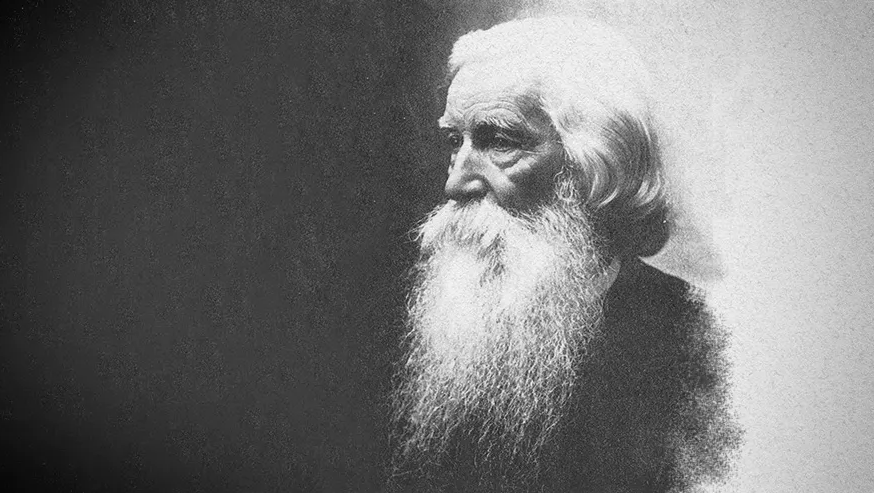
The 470-page autobiography has sat undisturbed on my bookshelf for a couple of years since I acquired it from an elderly minister clearing out his books. From what I can tell, it was published in 1891, making it more than 120 years old. It certainly smells that way. The pages are yellowed and battered, furnished with the grime of human hands – passed down from Victorian Christian to 21st century evangelical.
Despite the book’s dilapidated condition I’m glad to say I haven’t found reading it a chore. Quite the opposite in fact. It has proved uplifting, challenging and instructive. Here are some brief reflections on the book, the challenges Paton navigated in his earthly walk, and the truths that he was keen to stress about God.
Fickle culture
Anyone who has heard of John G Paton will be aware of his ‘claim to fame’. He was a missionary to the New Hebrides, a group of islands in the South Pacific now called Vanuatu. In his day these were laid claim to by the British and the French, although their native inhabitants were not European. The islands were inhabited by numerous tribes who were primitive and cannibalistic. Paton decided to move there and preach the Gospel to these previously unreached peoples. He ended up spending most of is life there and this is the main focus of the book. But this isn’t where his missionary journey began.
“Lockdown has presented a chance to catch up on things that previously got pushed aside in the maelstrom of normal life”
Paton was born in May 1824 on a small farm near Dumfries, in the Scottish Borders. The son of a humble stocking manufacturer, he wasn’t destined for a remarkable life. Like many young men in his day he was expected to take on his father’s trade or find work in the local community. But God had other plans for his life. Paton’s father was a devout man and, unbeknownst to John, he had prayed fervently that his son might be called to the mission field.
As he reached adulthood, God moved John Paton to pursue this calling and he travelled to Glasgow where he trained to be a minister. He later went on to work with the Glasgow City Mission. If Paton’s missionary work in later life was to be amongst a dark pagan culture in the South Pacific, his training ground was a fitting preparation. In Glasgow he lived amongst the poorest members of society, grappled with alcoholism, prostitution, domestic violence and social deprivation. In this darkness, the light of the Gospel shone brightly.
Paton endured two major culture shocks in his life. First, he was transplanted from the quiet, rural village where he grew up to the chaos of a rapidly industrialising Glasgow. From there, he was catapulted into the unknown world of the New Hebrides. Each culture was fickle and, on the surface, presented a challenge to his life and Christian faith. The people were skeptical, even violent towards the Gospel. There were many temptations and many fears. But God enabled him to encounter each culture and gave him the strength and wisdom he needed to navigate them.
What an encouragement this is. Throughout history, believers have grappled with numerous cultures. We continue to do so today. But the truths of scripture and the promises of God are timelessly relevant. By the illumination of the Holy Spirit, they lend us the guidance and strength we need to live out our Christian faith.
Fearless living
Paton’s experiences in the New Hebrides were remarkable and too many to recount in this article. His autobiography, although explicitly Christian, garnered favourable reviews from secular publications including The Guardian, The Telegraph, The Spectator and The Scotsman. How times have changed!
Each chapter depicts escapes from cannibals. On numerous occasions the missionary was certain that he would die. Indeed, numerous attempts were made on his life. But somehow he always escaped, at many times simply raising his hands and saying firmly ‘God loves you, I love you, I mean you no harm’. Paton remained determined to preach the Gospel despite this ever-present danger.
“The truths of scripture and the promises of God are timelessly relevant”
There were other severe trials. His first wife and newborn child died shortly after he arrived in the New Hebrides. After burying them he was afflicted by illness for several months and was so weak he could hardly walk. Bouts of fever came and went throughout his time on the islands as his body failed to adapt to the tropical climate.
He was regularly robbed by the locals and visiting traders, he lost friends and was often completely alone in a dangerous land. Yet his determination to stay and continue preaching the Gospel hardly wavered. John Paton lived fearlessly, trusting that the God who he proclaimed would protect him and call him home when he had purposed, and only then. Surely this fearless faith is something we should strive towards as Christians today.
Faithful God
The golden thread running through Paton’s autobiography is the faithfulness of God. Encountering each trial, Paton pleaded with God in prayer, submitted to his wisdom, and was delivered. Somehow, against impossible odds, he found the strength to go on and died an old man full of years.
Through Paton’s missionary work, God did miraculous things in the New Hebrides. Towards the end of Paton’s life, the entire island of Aniwa professed Christianity and by 1899, missionaries had been established on twenty five of the thirty islands. Today, more than 80 per cent of Vanuatuans profess a Christian faith.
Like all great believers throughout history, Paton was keen to give all the glory to his redeemer, Christ. His autobiography ends with these words:
“Reader, Fare-thee-well! Thou hast companied me – not without some little profit, I trust; and not without noting many things that led thee to bless the Lord God, in whose honour these pages have been written. In your life and in mine, there is at least one last Chapter, one final scene, awaiting us – God our Father knows where and how! By his grace, I will live out that Chapter, I will pass through that scene, in the faith and in the hope of Jesus, who has sustained me from childhood until now.”
What a man and what a God.

