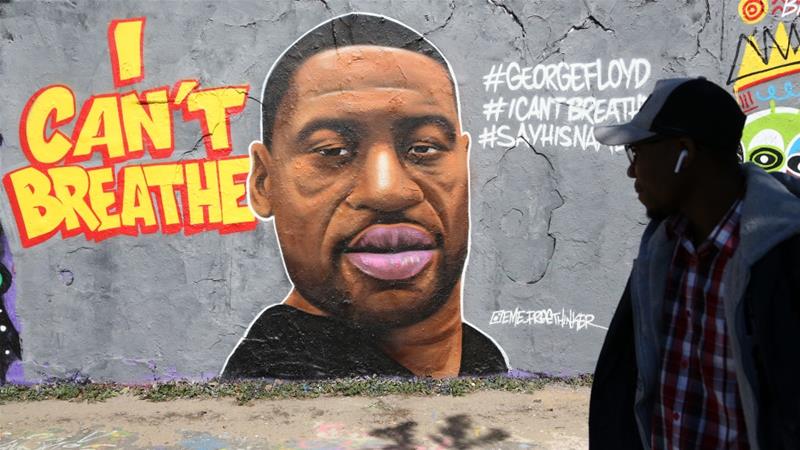
The snuffing out of George Floyd’s life by a stone cold US police officer broke months of media fixation on coronavirus. It’s unlikely that anyone reading this article will have missed the news, which has ignited protests and violence across the United States, but in case you have, here are the facts.
On May 25, police officers arrested George Floyd, a 46-year-old black man, outside a deli in Minneapolis, Minnesota on suspicion of using counterfeit money to buy a pack of cigarettes. Things quickly escalated. Floyd asked not to be placed in the back of the police car saying he was claustrophobic. He didn’t resist arrest, or try to escape. Inextricably, three officers pinned Floyd to the ground. One on his legs, another on his back and the third officer, Derek Chauvin, with his knee on Floyd’s neck.
For several minutes the officers applied significant pressure to Floyd who complained again and again that he couldn’t breathe. A crowd of onlookers had assembled and appealed to Chauvin to get off Floyd’s neck. At one point, Floyd cries out for his mother, clearly in a great deal of distress, before falling unconscious. In total, Chauvin knelt on Floyd’s neck for a period of 8 minutes and 46 seconds. By the time paramedics arrived to assist, Floyd was in a critical condition. He died later that day.
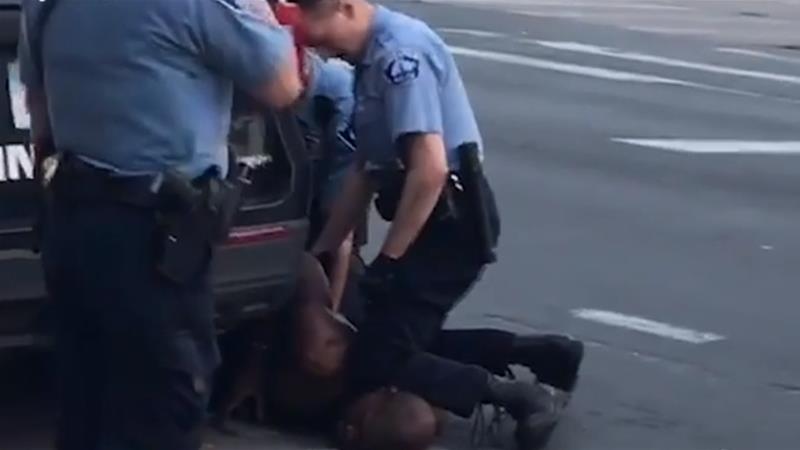
The New York Times was able to piece together the moments leading up to George Floyd’s death. Drawing together CCTV footage, phone footage from onlookers and reviewing official documents their investigation provides compelling evidence that the police officers involved, and particularly Chauvin, acted in a way that defied police protocol and, frankly, basic human dignity. It’s a harrowing report to watch.
News of Floyd’s treatment ignited fierce anger amongst the Black community. He was the victim of police brutality that occurs frequently in the US and often involves young black men as victims. Just days before the death of George Floyd another unarmed black man, Ahmaud Arbery, was gunned down in the street in Brunswick, Georgia by two white men – one a former police detective – after he was seen jogging down the street. The men allegedly mistook Arbery for a suspect in a recent break-in who also happened to be black.
“The police officers implicated in George Floyd’s death acted in a way that defied police protocol and, frankly, basic human dignity”
Today it was announced that Derek Chauvin is to be charged with 2nd degree murder for his actions on 25 May. Three other officers involved in the killing of George Floyd face charges of aiding and abetting. We must pray that justice is served. These men must be punished for their crime to send a strong message to the police that brutality and inhumanity will not be tolerated. And a signal to US citizens, particularly African Americans, that they are worthy of dignity and respect.
The anger of African Americans is understandable. As Christians, we should mourn with our brothers and sisters across the pond who feel the loss of George Floyd keenly, and condemn continuing injustice against their community. Racism runs deep in American culture and strong currents still exist in many parts of the country. It’s inevitable that this despicable prejudice also exists in the ranks of US police departments and needs to be rooted out. But addressing racial prejudice in America has never been a simple task.
America has been split along racial lines since its very inception. As far back as 1619, African slaves were being brought ashore in the British colony of Jamestown, Virginia. Slavery persisted on plantations through the 17th century, 18th century and well into the 1800s. Although its hard to estimate how many slaves were brought to the ‘New World’ during this period, some historians have estimated that as many as 7 million were transported there during the 18th century alone.
Slavery was ended in 1865 with Abraham Lincoln’s Civil War era Emancipation Proclamation. But this nowhere near ended the subjugation of black people in the US. Slavery itself persisted for years illegally and black Americans, freed from the plantation economy of the Confederacy, found themselves unable to find work, and stigmatised by white communities. Strong prejudice against African Americans lasted at least another century until the days of the Civil Rights movement in the 1960s. After this brave, peaceful movement, the country began to understand that black Americans are neighbours and citizens, equal in the eyes of God and of the law.
This is a very simplistic overview of the experience of African Americans. But it goes some way towards demonstrating just how deep and serious racial division is in the United States. The injustice that African Americans face today is the legacy of a catastrophic sin, slavery, that was perpetrated for hundreds of years.
“The injustice that African Americans face today is the legacy of a catastrophic sin, slavery”
It’s no coincidence that economically deprived areas in Southern States today tend to be populated by black Americans. In 2019, a research paper by economic policy initiative The Hamilton Project concluded that: “Counties with disproportionately high shares of black Americans today are the same counties that had large black populations before the Civil War, suggesting that historical conditions have had extremely persistent impacts on the outcomes of African-Americans…poverty in the Deep South tends to be much higher in counties with high black populations”.
Poverty is closely associated with crime so it should be no surprise that young black men, men like George Floyd, are frequently the victims of police brutality.
The church in the United States has a huge responsibly to speak against the injustice represented by the case of George Floyd, and the stubborn stain of racism in the US. The church is not divided by the colour of people’s skin. Men, women and children of every creed and colour place their trust in Jesus Christ.
There’s a lesson here for all Christians. From the Bible we know that all human beings are created in God’s image. All are equal. And all are valuable.
Racism will persist for some time. Perhaps it will never be stamped out altogether. But the church should always be at the forefront of efforts to fight it. The words of the prophet Isaiah can be our rallying call: “Learn to do good; seek justice, correct oppression”. As ever, we point people to Christ, who bids all human beings to come to him and find peace.
The Editor, Wednesday 3 June 2020
Read more recent articles here.
 salann