As the lockdown eases across Scotland many of us are breathing a sigh of relief. Schools are back, albeit with strict social distancing rules. Workers have dusted off their brogues for a return to the office. And churches have opened their doors again.
These steps are welcome. The sooner Scotland get’s up and running again, the better. However, it would be wrong to assume that a return to the status quo is on the cards for all Scots. Normality may feel within the grasp of some hands, but it is far beyond the grasp of others.
In ordering a nationwide lockdown earlier this year the Scottish Government took a calculated risk. Shutting down vast swathes of the economy and relegating citizens to their homes was, in its estimation, necessary given the pressing danger posed by coronavirus.
Ministers were following the example of numerous countries worldwide, and the advice of the foremost minds in epidemiology. The majority view was that failing to take action would have led to greater transmission of the virus and more deaths – something that no responsible government could countenance.
It wasn’t an easy decision. In opting for lockdown, our leaders were well aware of the negative effects – economic, social and otherwise – that would result from such a policy. Their hope was that the consequences of lockdown would be the lesser of two evils, resulting in less serious harms to the general population.
Christians have differing views on lockdown. Some believe it was needlessly draconian. Others would say it didn’t go far enough, or that measures weren’t adequately enforced. Whatever views we have on the policy are somewhat redundant now. The church must turn its gaze to the future and the post-coronavirus era.
The challenge ahead for the people of Scotland and the rest of the UK is hard to quantify. In terms of the economic impact of coronavirus, there are some deeply troubling signs. The UK Government has had to borrow vast sums of money since March, creating a huge burden of debt for future generations.
Earlier this month, Conservative Chancellor Rishi Sunak revealed that in this financial year alone (April 20 – April 21), the Government could borrow as much as £391bn. To put that in context, before the crisis, the Government had expected to borrow £55 for the entire financial year. Increased national debt will mean higher taxes and less money to spend on vital services in the years ahead.
Couple this debt with a looming mental health crisis caused by social isolation, and a wider health crisis caused by the deferment of medical procedures during the lockdown and the outlook is very grim indeed. It could be years, decades even, before the UK begins to recover economically.
At a micro level, the impact of coronavirus can be counted in terms of people’s lives and livelihoods. As of today, close to 20,000 people in Scotland have contracted coronavirus, 4,000 have recovered and 2,500 have died. The UK total stands at 327,000 cases and 41,000 deaths. Families have lost parents, husbands, wives, sons and daughters. Those left behind will need counselling and support.
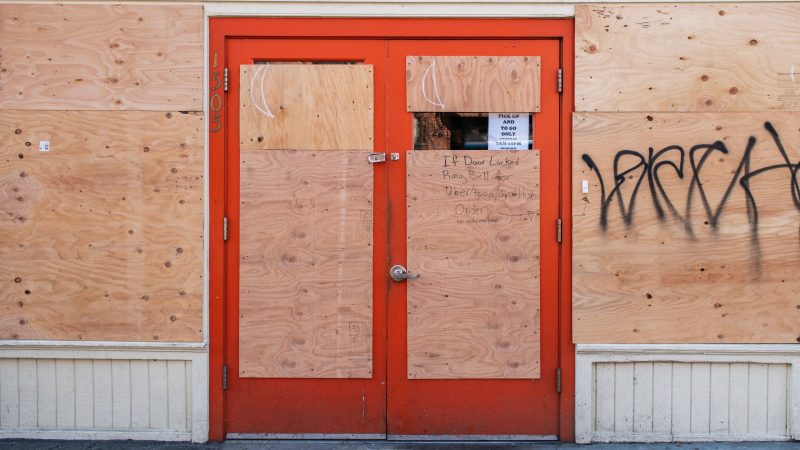
Still more people have lost their employment. Businesses have shut their doors, employees have been laid off and many, unable to pay their rent, are facing the loss of a roof over their heads. Some of these people will fall into addiction, become depressed and even consider suicide. In the harsh financial climate to come, helping such individuals to find their feet again will not be straightforward.
The bleak outlook we are facing should be a rallying call for the church of Christ. As Christians, we are called to help the hurting and the vulnerable. Scripture is full of such commandments for the people of God. Psalm 82:3 – “Give justice to the weak and the fatherless; maintain the right of the afflicted and the destitute”. Proverbs 19:17 – “Whoever is generous to the poor lends to the Lord, and he will repay him for his deed”.
In the years ahead, the church can – and should – be a force for good offering practical help and support to those who need it. With the state crippled by debt, local churches may be the only support available to the needy.
The hard days ahead will also provide a unique opportunity to share the Gospel, extending hope to the needy and the afraid. This world before us is temporary, its trials transitory. The endless span of eternity stretches on before us all. May God use his church in the post-coronavirus era to extend healing to the nations in the true sense.
 salann