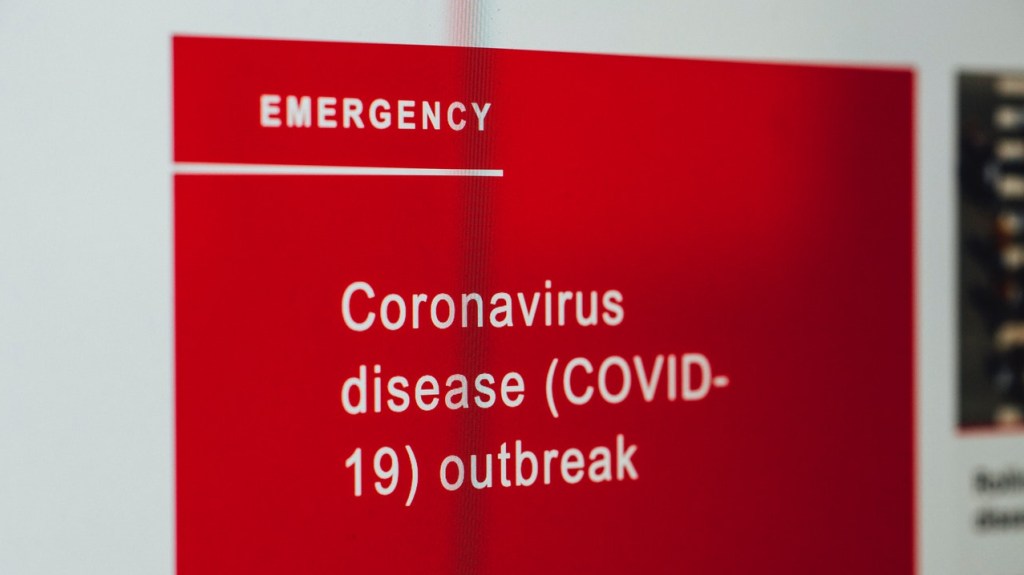
For a good couple of months coronavirus had a monopoly on the news headlines. Initially it was just the spread of the disease itself. Then it was the lockdown, then the Government’s financial bailout, then the Prime Minister’s hospitalisation, then the PPE shortages, then the care home crisis, then the Dominic Cummings affair. The first item in every bulletin was virus-related. The pandemic’s number one position in the realm of current affairs was unchallengeable.
During the last few weeks, however, that has begun to change. Several times, now, the virus has played second fiddle to other, unrelated stories. There was the death of George Floyd and the tidal wave of indignation it unleashed. There was the possible breakthrough in the Madeleine McCann case. There were the stabbings in Reading. Even the death of Dame Vera Lynn briefly claimed the top spot.
It is a reminder of how fast-moving and impermanent everything in this world is – that even coronavirus is starting to become yesterday’s news! It is possible, of course, that the dreaded ‘second peak’ will strike at some point in the next few months, in which case the virus will undoubtedly reclaim the spotlight. But the second peak will also pass, and eventually there will be no more peaks. The pandemic will be over, and the subject will gradually fade from our field of vision.
“This world is fast-moving and impermanent”
That is what happened after the Falklands War and the death of Princess Diana and the terrorist attacks of 9/11. These were stories which for a few weeks or months seemed too momentous to ever recede, and yet it did not take all that long for the unrelenting flow of history to consign them to the archives. It is little more than a year since the Notre Dame cathedral went up in flames, but who remembers that now?
In some ways this is an encouraging thought – for most of us the archiving of the coronavirus saga cannot come soon enough! But perhaps it has an unsettling implication, too. If the most headline-dominating, epochal events quickly struggle to retain the world’s attention, then there is little hope for you and me. If even a global pandemic is destined to be left behind as the world moves on and becomes interested in other things, how much more will that be our fate when we are dead and gone?
King David once wrote: ‘As for man, his days are like grass; he flourishes like a flower of the field; for the wind passes over it, and it is gone, and its place knows it no more‘ (Ps. 103:15-16). Those last words seem intolerably bleak. Surely we must leave a more lasting impression on this world than a random flower does on the vast meadow it briefly occupies. Surely our lives will be better-remembered than a nameless, indistinguishable piece of vegetation!
“For most of us the archiving of the coronavirus saga cannot come soon enough! But perhaps it has an unsettling implication, too”
Perhaps, indeed, they will be; David may be using a touch of hyperbole. But it is only a touch: at best we shall fare marginally better than that flower. And if it seems inconceivable that your life – presently such a hub of activity and vitality – could rapidly disappear into untraceable irrelevance, then try this little exercise: see if the term ‘Covid-19’ resonates with many people twenty years from now!
However, before becoming too depressed at the prospect of being forgotten, we must read David’s next words: ‘But the steadfast love of Yahweh is from everlasting to everlasting on those who fear him’! Yes, the world will one day carry on without us, not even noticing we have gone; we shall altogether drift from its attention. But, if we are Christians, we shall not drift from God’s. We were the focus of that attention before time began, when he elected us for salvation; and we still shall be when, long after time’s demise, we dwell blissfully in his presence.
We are not tiny, meaningless blips flickering momentarily on the vast radar of human history. We are not, ultimately, flimsy little flowers teetering precariously on the brink of oblivion. We are God’s precious ones, whose good he always has been and always will be pursuing. We are loved with a love as long-lasting as God himself, caught up in a great redemption with eternal dimensions. In Christ we have the kind of indestructible significance of which coronavirus can only dream! Let us therefore be greatly encouraged!
Guest contributor, Friday 26 June 2020
 salann