For Christians, and especially those with a keen interest in politics, it’s been a rollercoaster few weeks. With coronavirus, you might have expected the day-to-day business of politics to be disrupted, or differed. In some ways it has been. Matters not deemed immediately urgent have been pushed back. However, in many ways the crisis has only served to accelerate business on major moral issues, including the progress of primary legislation.
The cynical amongst us might wonder if the UK Government’s decision to rush through controversial no-fault divorce legislation in the last two weeks was premeditated. Has the Government scented an opportunity to push through its controversial Divorce, Dissolution and Separation Bill amidst the wider distraction of the virus, when MPs and critics aren’t able to apply the usual level of scrutiny? The bill could be finalised within the month.
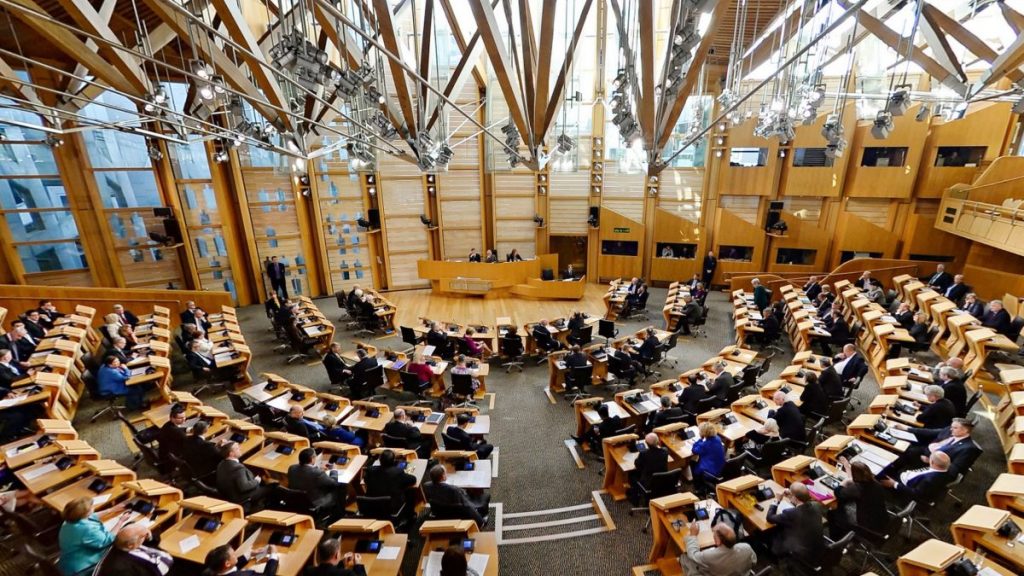
At Holyrood, the Scottish Government has also decided to publish major legislation on hate crime in the midst of a pandemic and less than a year before the next Holyrood election. A host of experts have warned that provisions in the Government’s Hate Crime and Public Order (Scotland) Bill could undermine free speech and religious liberty. Are Ministers gambling on distractedness there?
In any case, at a time when politicians should be focussing on the response to COVID-19 and the significant socio-economic outcomes that will follow, they are also being asked to grapple with highly complicated and controversial legislation that has to do with people’s relationships and fundamental liberties. Surely it isn’t the right time for this.
“Politicians are being asked to grapple with highly complicated and controversial legislation in the midst of the pandemic”
Perhaps the saddest example of legislation being debated in these unprecedented times is the UK Government’s revised abortion regulations for Northern Ireland.
Yesterday, Peers backed the new rules to allow abortion on demand in Northern Ireland up to 24 weeks, and abortion up to birth for ‘serious disabilities’. A further vote in the Commons is still to take place but it is likely they will sail through there too. This completely bypasses the Northern Ireland Assembly, which should hold decision-making power in this area.
A small mercy in the coronavirus period has been a growing clamour over gambling harms. A strong cohort of MPs has called for, and succeeded in passing, curbs on the gambling industry, which targets the most vulnerable with advertising and betting incentives. This week, a significant report calls for wide scale reform of gambling regulations in the UK. The momentum generated over the last few months could well lead to change.
Fickle and unpredictable politics will cause us great despair as Christians if we allow our hope to reside in it. The political winds are favourable on some things, at some times but they are so apt to change. Without any warning they can blow mightily against all that we cherish, and which the Lord esteems. It’s easy to become like Elijah who, in the midst of his troubling circumstances, said ‘I have had enough Lord’ (1 Kings 19:4).
“Fickle and unpredictable politics will cause us great despair as Christians if we allow our hope to reside in it”
In the UK, marriage and the family are under attack in England and Wales, Gospel freedoms are in jeopardy in Scotland, and the lives of the unborn are endangered in Northern Ireland. Glancing further afield, our brothers and sisters in Hong Kong are at risk of imprisonment for their faith and in Nigeria, Christians are being persecuted to the point of death.
We may indeed feel despair at all this and wonder what the Lord is doing. It is not sinful to do so. At many times in the book of Psalms, David cries out in distress, anger and confusion at his own state and the state of the nation around him. But despair is not the end of the matter. The book of Psalms also holds the remedy.
Psalm 146 is a wonderful example. The writer begins the Psalm by urging the Israelites not to “put your trust in princes, in human beings, who cannot save”. How true this is in every age! Human beings are flawed and they are mortal: “When their spirit departs, they return to the ground; on that very day their plans come to nothing.” To put our trust in people in the ultimate sense would be foolish and only result in disappointment.
The Psalmist continues: “Blessed are those whose help is the God of Jacob, whose hope is in the Lord their God. He is the Maker of heaven and earth, the sea, and everything in them— he remains faithful forever.” Enter a being who is worthy of our trust – the God of heaven and earth, who made the world we live in and remains faithful forever! There is no caveat here. God is faithful (trustworthy and loyal) to his people at all times and forevermore.
“Despair is not the end of the matter”
The next verses of the Psalm contains some very precious promises for believers living in every age, and especially those of use who feel tempted to despair looking at the world around us today:
“He upholds the cause of the oppressed and gives food to the hungry. The Lord sets prisoners free, the Lord gives sight to the blind, the Lord lifts up those who are bowed down, the Lord loves the righteous. The Lord watches over the foreigner and sustains the fatherless and the widow, but he frustrates the ways of the wicked. The Lord reigns forever, your God, O Zion, for all generations.”
Not only is our God trustworthy and loyal to his chosen people, he is the sovereign ruler of the world. God loves and upholds the oppressed, he encourages those who are downcast and he frustrates the ways of the wicked. As Christians, we don’t put our trust in earthly princes but in The Prince, Christ who “reigns forever”. Here is a sovereign worthy of our worship and trustworthy beyond all measure. What comfort. What assurance. What hope.
Sometimes we need reminded of these basic but wonderful truths. God is in control of all things and is achieving his purposes. He is infinitely wise, powerful, holy, just, good and true. He is the foundation of our hope, not politics, not people or anything else.
In times like these, let’s renew our devotion to God and pray for help when we encounter feelings of despair. As ever, we continue to be salt and light in the society around us; proclaiming the Gospel, engaging with politics and culture and loving the people around us.
 salann