The Editor, 18 April 2020
Anyone with a Twitter account will have witnessed the furore this week over UK Health Secretary Matt Hancock’s badges for carers.
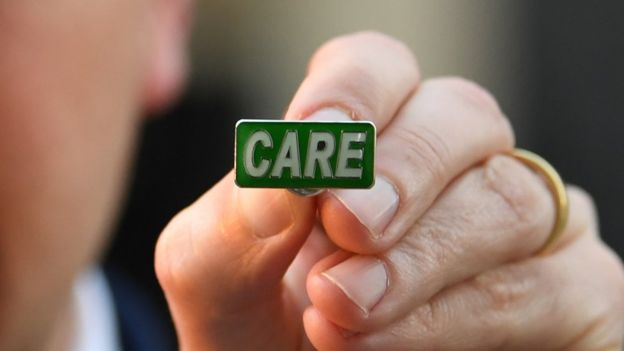
On Wednesday, Hancock announced that the UK Government is backing a scheme which encourages social care workers to wear a small green badge with the word ‘CARE’ emblazoned on it.
The Government’s press release on the badges described them, in typical jargonese, as a: “Unifying new ‘care’ brand for care workers with NHS-style identity, to ensure recognition and access to benefits during crisis and in response to ask from sector”.
The idea behind these badges is that they make it easier for carers to access services such as reserved shopping hours at supermarkets which have been ring-fenced for NHS employees. By wearing a CARE badge when they’re out and about, carers will be able to enter shops during reserved hours without being questioned on whether or not they are eligible.
The badges are also designed to mark out carers – many of whom don’t wear distinctive uniforms – as essential workers, and thus lend them a similar status to doctors, nurses and paramedics.
Hancock’s badge scheme was met with massive hostility by some elements of the media. Some commentators felt that the scheme is a gimmick, a PR stunt, which doesn’t give carers the true recognition they deserve and fails to offer any meaningful practical support.
As with most debates in politics there’s merit in both sides of this argument. I don’t intend to take sides. However, there’s one undeniable truth that I will affirm, something that both camps agree on – the vital importance of carers.
Carers, like doctors, nurses, paramedics, and other health workers, fulfil an incredibly valuable role in society. They support the elderly, terminally ill and disabled – groups who are particularly vulnerable to COIVD-19 just now, but also in need of support and protection round the clock whatever is going on in the wider world.
When I was a teenager my mother took a job as a home care nurse and worked with terminally ill individuals who had left hospital to die at home. Her job was gritty, often physically taxing and always emotionally exhausting. I have a huge deal of admiration for the work she did over five or six years.
Some of mum’s clients needed changing and washing daily, others needed help with cooking or shopping and each client was terribly ill. During her years of service she often received abuse from clients who were suffering from mental illness. Sometimes men would grope her and make lewd sexual comments.
On top of this there was a daily struggle to convince clients that they needed help. Many of them didn’t want to be changed or fed – thinking it a loss of dignity – and would fight off attempts to provide care.
And of course there was the knowledge that one day soon, each of the clients would die – often alone, and in great discomfort. Mum was invited to more funerals in those short years of work than any ordinary person would attend in a lifetime.
Of course the work was also rewarding in many ways. Through her work mum got to know dozens of older people in the community around her and have deep conversations with them about life and faith. Many of the clients she helped became her friends and she still sees their wider families today. This is what kept her going through the years – knowing that she was providing inestimable help, support and friendship to vulnerable people in the most difficult seasons of their lives.
As a Christian she knows well that the highest virtues in life are humility and servant-heartedness. The LORD Jesus washed the feet of his disciples and associated with those whom society would rather forget. Christianity teaches that it is the servants of this world – the kind, the meek, the obscure and the unremarkable who are most esteemed in God’s economy.
Not so in the economy of the world. Over the years, the reaction of others to mum’s work was consistently negative.
It’s hard to believe how many snobbish comments she endured from others when asked what she did as a job. ‘You’re changing old people’s nappies?’ ‘Wouldn’t you rather do a real job?’ ‘What possessed you to go into care?’ These comments caused my mother great hurt and I remember her in tears on more than one occasion.
It’s also a sad fact that her job was poorly paid. Carers, like others in so-called ‘low-skilled’ jobs, earn less than those in similar professions like nursing and their average pay hovers around the minimum wage. Surely this isn’t right given the tremendous physical and emotional resilience carers need to do their job, and the invaluable service that they provide to real, vulnerable human beings?
It’s a similar story with other professions. Before the COVID-19 crisis, Home Secretary Priti Patel provoked outrage by announcing that post-Brexit immigration rules would prevent certain ‘low-skilled’ workers from entering the UK. The jobs she disparagingly labelled ‘low-skilled’ included carers, construction workers, radiographers, occupational therapists and paramedics. Why? because they have comparatively low annual salaries.
Returning to the CARE badge scheme, whether we like the badges or not, the fact that carers are being recognised just now is positive. It’s hard to imagine a more worthy profession and it’s good that it’s in the spotlight. But why is this recognition only coming now in the midst of coronavirus? Carers deserved respect, recognition and, let’s face it, higher wages long before coronavirus arrived on our shores.
In the wake of the crisis, politicians must make good on their pledges in support of carers by furnishing them to work effectively in the future. They also need to do whatever they can to change societal attitudes about the profession and encourage young people to take it up. Only then will the gracious words of recent weeks be anything other than hot air.
The church also has a role in this. So often as Christians we fall into the world’s sinful habit of esteeming particular professions over others. We praise church members who are lawyers, police men, doctors or politicians and overlook those who are in other modes of employment. We need to value all members equally and make them know that they are valued.
Scripture teaches us that all (legitimate) professions are valuable in the eyes of God. Jesus didn’t mark out some forms of work as ‘better’ than others. Granted, some jobs require particular skill or involve more responsibility. But this doesn’t make them more important. Do we truly believe this as Christians? And are we teaching it in our churches?
Christians can also endorse worldly attitudes in our own homes. For example, Christian parents sometimes push their children to attend university in order to land a ‘good job’. What do they mean when they say this? It’s not wrong to want children to succeed academically but Christian parents should ask themselves, ‘would I be happy and supportive if my child wanted to be a plumber, a builder, a supermarket cashier or a carer?’ If the answer is no then their hearts might not be in the right place.
As Christians we should be the first to praise carers – and cleaners, bin men, delivery drivers and others who are often overlooked or deemed ‘low-skilled’. Not just during COVID-19 but at all times. In doing so we help society realise the dignity of all work, as purposed by God from the beginning.
Pray:
- That carers and other key workers would be helped just now as they are under great stress.
- For the church in Scotland, England, Wales and Northern Ireland to value professions equally and reject the sinful stigmas of the world.
- For young Christians to be called into caring professions.
- Give thanks that we live in a society that values the vulnerable and that this will continue.
 salann