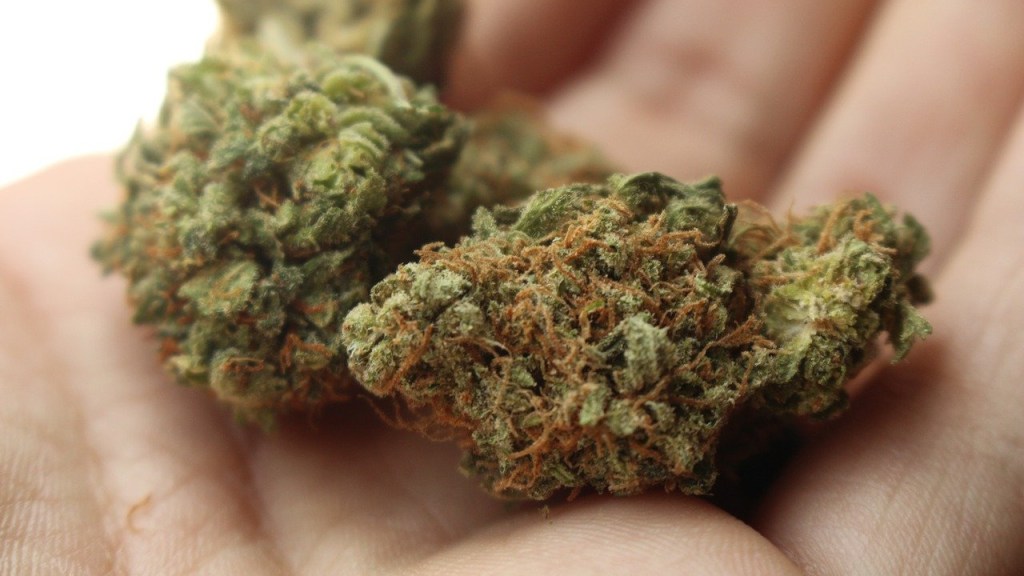
Yesterday, The Observer published an interesting article by drugs campaigner Mike Power on the legalisation of cannabis in Canada.
It’s an interesting piece because despite his pro-cannabis stance, Power talks candidly about the failures of the Canadian experiment.
Recreational cannabis has been legal in Canada for two years under the Cannabis Act 2018, and effectively for longer under lax ‘medical cannabis’ legislation, in force since 2001. Under Canada’s Cannabis Act of 2018, adults are allowed to purchase up to 30g of the drug from government-licensed shops.
Advocates of the change claimed it would take money out of the hands of criminals and create a regulated market where users could buy ‘safe’, state sanctioned quantities of the drug, in the same way they would buy alcohol or tobacco.
Heralding the legislation in 2018, Canadian prime minister Justin Trudeau claimed: “The old approach to cannabis didn’t work. It was too easy for our kids to get it and gangs and drug dealers were reaping the profits. That changes from now on.”
Apparently not.
Two years on, an illegal cannabis market, and all of the crime associated with it, still exists in the country and it is burgeoning. Statistics Canada, a state agency, reports that just 29% of cannabis users buy all of their product from a legal source. Whilst 4 in 10 Canadians told the organisation that they bought at least some cannabis from illegal sources in 2019.
According to Power, the ongoing success of the black market is due to the poor-quality, expensive weed on offer from shops: “Why would anyone drive a few miles up the road to score bad weed from many of the government shops when your regular black-market dealer lives nearby, has better product and brings it to your door for half the price?”
Cannabis dealers have been cultivating the drug for decades, in differing strains, and usually to a higher potency. Why would users suddenly opt for a lower strength version of the drug, which gets them less high, simply because the Government tells them to do so?
It may only be two years since cannabis was legalised in Canada, but the signs are not good. Drug dealers profits are virtually unscathed, and the potency of the drug is undiminished. Despite the good intentions behind the change, Trudeau’s Government may have ended up doing more harm than good.
A change in the law has sent a strong message that the drug is safe, and changed social attitudes towards it. It’s highly likely that more people in Canada are using cannabis than in past years and, in a commercial market, more young people are being exposed to it through marketing.
On this last point, the stakes couldn’t be higher. Teenagers are especially vulnerable to the drug, which is proven to cause psychosis, paranoia, depression and anxiety, and even the early onset of serious psychological conditions like schizophrenia and bipolar disorders.
In the coming years, it is possible that Canada will see a huge proliferation in mental health problems, and be forced to divert vast amounts of public money into treating victims of recreational cannabis, and supporting families and communities devastated by the drug.
The situation in Canada is a warning to the UK not to pursue the same path.
In recent years, pressure has been mounting on the Government here to relax the law. Campaigners are vying for legal ‘medical cannabis’, a proxy for cannabis legalisation by the back door.
There are various compounds in the cannabis plant which are useful in treating certain conditions, when they are isolated and applied in the correct dose. Giving people raw cannabis to smoke or ingest is not a medically sanctioned treatment. But it appears to be recommended by medical cannabis lobbyists. It’s notable that in most of the countries that now have legal recreational cannabis, the path to legalisation began with so-called ‘medical cannabis’ laws. It’s clearly a red herring, used by campaigners to open the door to a further liberalisation of drugs laws.
The legalisation of drugs means the potential for huge profits. Massive companies in the US and Canada, and wealthy celebrities like rapper ‘Snoop Dogg’ are invested in commercial cannabis, and stand to make further gains as their companies move into other jurisdictions. A recent investigation by the British Medical Journal revealed strong links between such groups and pro-cannabis lobbyists working in the UK.
The risk of a softer approach to cannabis in the UK is amplified when you consider that two key players in Boris Johnson’s Government favour a change in the law. Power writes that on a trip to Canada in 2017, he was accompanied by “two Tory party insiders, Blair Gibbs, ex-adviser on police matters to Boris Johnson when he was mayor, and Danny Kruger, son of TV chef Prue Leith, who wrote the ‘hug a hoodie’ speech for David Cameron.
“Both men experienced something of a Damascene conversion in their views on cannabis law during that trip. Days after his return, Kruger wrote in the Spectator: ‘We do not need to ban everything bad. After all, the Victorians never prohibited alcohol. They regulated it, taxed it and hedged it about with a culture of disapproval. Instead of the prohibition of cannabis we need an old Victorian virtue: temperance.’
“Blair Gibbs moved to Canada in 2017 to work as a cannabis consultant, but in August 2019 he took a job in the PM’s office. Both men are now at the very heart of the British government: in 2019 Kruger was parachuted into the safe Tory seat of Devizes to stand as MP in the last election and is also an adviser to Johnson.
“Whether their weed-friendly outlook survives the cold glare of Whitehall orthodoxy remains to be seen. But it is undeniable that the economic libertarians of the Tory party in 2020 are much more pro-cannabis than their newly nationalising Labour party counterparts. There are, after all, many billions of pounds to be made by the kind of people who fund the Tories: land and property owners and the banks that will finance the new industry.”
It’s clear that the law in Canada isn’t working. Power, a pro-drugs campaigner for three decades admits that “legalising cannabis in Canada has generated just as many challenges as it solved”. We must keep up pressure on our Government not to be lured into the same trap. No amount of profit could justify the great social costs legal cannabis would cause.
Pray
• For wisdom for our leaders, that they would make good decisions which value people over profit.
• That the attempts of pro recreational drugs campaigners would fail.
• That Govt policies would help people in the grip of drug addiction to quit drugs and rebuild their lives.
 salann