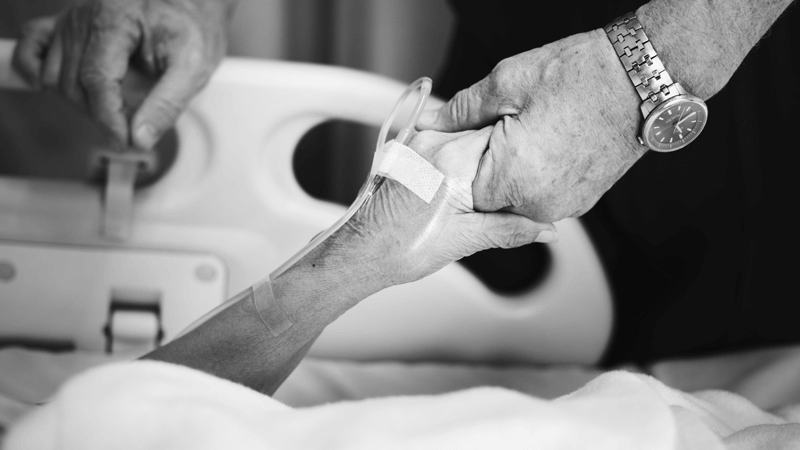
A common theme in recent weeks has been the need for us to take steps to protect the elderly, the infirm and the vulnerable from COVID-19.
Whether it’s through hand-washing, self isolation, or social distancing, authority figures in the highest echelons of Government, the NHS, local authorities and local communities have encouraged careful and sacrificial behaviour on the part of citizens in order that the vulnerable be safeguarded from a terrible virus.
People comply with these measures not just because they’re told to do so but because it’s right. In God’s common grace, human beings know that defending the vulnerable, the elderly, the weak is the proper thing to do.
But in recent months, society’s approach towards the vulnerable has been the focus of an altogether different debate – the debate around assisted suicide, or ‘assisted dying’ as it is now euphemistically termed. Earlier this year, a debate was held at Westminster by Lib Dem MP Christie Jardine on the need for legislation to permit assisted suicide in the UK. It came on the back of several attempts, at Westminster and in the Scottish Parliament, to change the law and allow doctors to administer fatal drugs to patients who are terminally ill.
A coral of MPs are pushing the UK Government to review the law, complaining that the families of patients who want to end their lives have to pay serious money and risk prosecution by travelling to suicide clinics overseas. In reality, such incidents are rare and families are not taken to court, on the grounds that it would not be compassionate to do so. The argument is a red herring, used to elicit sympathy on the part of its hearers.
There are tragic cases and the people involved deserve help and compassion, but opening the door to assisted suicide would be a profound injustice. Aside from the moral issues in encouraging suicide, a violation of the sixth commandment and an attack on the image of God, it would put the most vulnerable groups in society – the elderly, the terminally ill and the disabled – at risk.
In countries where assisted suicide and euthanasia have been legalised a common concern expressed by pro-life campaigners is that these groups of people feel pressure to end their lives because they think that to go on living would make them a burden – financial or otherwise – on their family and the state.
There’s also strong evidence to suggest that changing the law to allow assisted suicide for those deemed terminally ill – a prognosis which is problematic in itself – quickly progresses to include other non-terminal conditions, and even mental illness. In Belgium and the Netherlands, the countries with the most permissive laws in this area, doctors are even permitted to euthanise dementia sufferers and children. The kind of legislation which exists in these places is neither right, nor compassionate.
In the UK, we have one of the best health systems in the world in the NHS. And we have world-class doctors who are able to provide excellent pain-relieving and life-affirming palliative care. But they are chronically underfunded. A recent event at Westminster by pro-life society SPUC heard that as many as 100,000 Brits do not receive the best quality palliative care that they could every year. Surely politicians should do everything in their power to address this before pushing for a law to end the lives of the infirm.
One of the more grisly arguments levied by assisted suicide campaigners is that assisted suicide is good for the economy. Palliative care at the end of a person’s life is expensive and time-consuming. A cocktail of barbiturates is not. A paper last month by two Scottish academics said as much and received widespread condemnation.
It’s hard not to see the stark contrast in how certain politicians, campaigners and elements of the media are speaking about the elderly and the infirm in light of coronavirus today, compared to how they were contemplating such groups just weeks ago in the context of assisted suicide. Perhaps, in God’s grace, this crisis will make us realise, as a society, that these people we are protecting now are worthy of protection in the years ahead as well. Perhaps our society will recoil from assisted suicide with a renewed suspicion and disdain.
There was a glimmer of hope of this today when it emerged that the Royal College of Physicians has clarified its position on ‘assisted dying’. A statement released by the organisation said:
“In early 2019 the RCP carried out an online survey of its members’ and fellows’ views on the subject of assisted dying. 43.4% of respondents said that the RCP should be opposed to a change in the law on assisted dying, 31.6% said the RCP should support a change in the law, and 25% said the RCP should be neutral. Based on these results RCP Council adopted a position of neutrality on 21st March 2019.
“Neutrality was defined as neither supporting nor opposing a change in the law, to try to represent the breadth of views within its membership. Regrettably, this position has been interpreted by some as suggesting that the College is either indifferent to legal change or is supportive of a change in the law.
“So that there can be no doubt, the RCP clarifies that it does not support a change in the law to permit assisted dying at the present time.”
Hopefully this stance, and the stance of doctors will not change in the face of campaigning by the assisted dying lobby. Perhaps, having come through the Covid-19 crisis, doctors will abhor the idea of more death enough to make them reject such attempts.
We can pray to this end.
 salann